Source Wooden Kids Billiards Table for Racing, Entertainment, and Play
Compare 30 wooden kids billiards table options featuring foldable designs and various sizes. Buyers can evaluate specifications like playfield material, leg structure, and included accessories to find suitable units for racing, entertainment, and home play; compare the available evidence and request quotations based on your requirements.
Key considerations
Products List


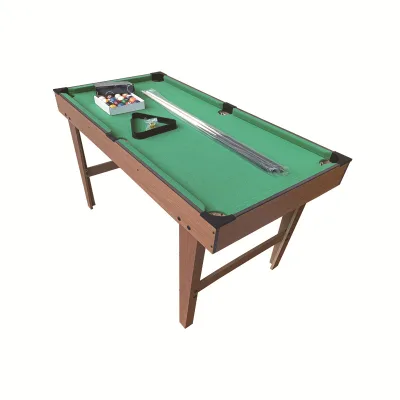
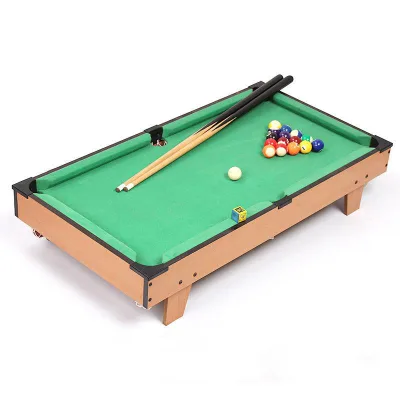


Comprehensive Sourcing Guide
Wooden Kids Billiards Table Sourcing Guide
Procuring a wooden billiards table for children requires balancing durability with age-appropriate dimensions, as observed listings indicate models specifically designed for small playfields and entertainment use. Buyers must verify that the product structure supports single-cue usage and includes essential accessories like cues, balls, and chalks to ensure immediate playability. The observed data confirms that these units often feature foldable designs with laminated legs, making them suitable for indoor environments where space is a primary constraint.
Sourcing decisions should prioritize the material composition, specifically noting the use of MDF with PVC laminated aprons and polyester surfaces on the playfield. These materials offer a cost-effective balance between structural integrity and safety for younger users, though the specific finish quality must be confirmed against the supplier's actual production samples. Buyers should also check the packaging details, as plain cardboard or carton packing with half knock-down configurations directly impacts shipping costs and the risk of transit damage.
Product Scope and Observed Listing Signals
The market for wooden kids billiards tables presents a wide range of specifications, from small 36-inch models to larger 60-inch variants, catering to different age groups ranging from toddlers to early school children. Listings frequently highlight the "Small" or "Medium" specification tags, which correlate with the physical footprint and the intended user height. Procurement teams must carefully distinguish between these size categories to ensure the table fits the designated play area and aligns with the developmental needs of the target demographic.
Observations reveal that while some units are listed as non-customized, others explicitly offer customization options, allowing buyers to tailor colors or branding to their specific requirements. The presence of multiple color options and foldable functions suggests a focus on versatility and storage efficiency, which are critical for schools, community centers, and home environments. Buyers should scrutinize the listed usage tags, such as "Racing" or "Entertainment," to confirm the product's intended play style matches their operational goals.
Technical Specifications to Verify
Technical verification must begin with the playfield composition, ensuring the surface is constructed from MDF with a polyester finish to provide a smooth, consistent roll for the balls. The rail corners and apron corners should be inspected for zinc alloy or ABS construction with plating, as these components endure significant impact during play and require robust materials to prevent chipping or structural failure. The leg structure, often described as L-shaped folding with PVC lamination, must be tested for stability and ease of assembly to ensure the table remains secure during active use.
Buyers should also validate the included accessories, as the standard package typically contains two cues, a set of balls, a triangle, and chalks, though cue lengths vary between 36 and 48 inches depending on the model. The net and gross weights, observed in the range of 45 to 50 kilograms, provide a baseline for logistics planning and floor load requirements. It is essential to confirm that the instruction sheet is included and that the single package size aligns with the shipping constraints of the intended destination to avoid unexpected freight issues.
Compliance and Safety Documentation
Safety compliance for children's play equipment is paramount, requiring verification that all wooden components and surface finishes meet relevant regional safety standards for toxicity and physical hazards. While specific certification marks like OEKO-TEX may appear in background data, buyers must request current test reports confirming that the MDF, PVC laminates, and metal plating are free from harmful substances suitable for the 2 to 7-year age range. Documentation should explicitly address the mechanical safety of folding mechanisms to prevent pinching or crushing injuries during setup and storage.
Procurement teams must ensure that the supplier provides a comprehensive instruction sheet that includes clear safety warnings and assembly guidelines tailored to the specific model. The absence of a specific certification in the provided facts does not negate the need for third-party testing; therefore, buyers should mandate proof of compliance with local toy safety regulations before finalizing any order. This due diligence protects the buyer from liability and ensures the product is safe for its intended young users.
Cost Drivers and Commercial Terms
The cost of a wooden kids billiards table is heavily influenced by the material quality, specifically the thickness of the MDF and the durability of the polyester surface finish. Variations in the rail corner material, such as zinc alloy versus standard plastic, and the inclusion of adjustable leg levelers can significantly alter the unit price. Buyers should analyze the observed price range of 0.99 to 3000 USD to understand the spectrum of quality, recognizing that lower prices often correlate with reduced material thickness or simpler packaging solutions.
Commercial terms must account for the Minimum Order Quantity (MOQ), which ranges from 1 to 700 units, allowing flexibility for both single-unit purchases and bulk procurement. The packaging method, described as plain cardboard or carton with half knock-down configurations, affects the volume efficiency of shipping and the overall landed cost. Buyers should negotiate based on the total landed cost rather than just the unit price, considering that the weight and dimensions of the folded table will dictate freight expenses and storage requirements.
Supplier Qualification and Quality Control
Supplier qualification should focus on verifying the place of origin, with many listings indicating production in China, specifically in regions like Huizhou or Guangdong, which are known for furniture manufacturing. Buyers must assess the supplier's capacity to maintain consistent quality across batches, particularly regarding the lamination of aprons and the plating of metal components. Requesting pre-shipment samples is essential to verify that the actual product matches the listed specifications for dimensions, weight, and material composition.
Quality control protocols must include a rigorous inspection of the folding mechanism and the stability of the legs, as these are common points of failure in knock-down furniture. The supplier should demonstrate a clear process for handling defects in the playfield surface or the alignment of the rails, which are critical for the game's integrity. Establishing a clear communication channel for addressing quality issues and defining the acceptance criteria for the final product will mitigate risks associated with mass production and international shipping.
Long-Term Procurement Checks
Long-term procurement success depends on establishing a reliable supply chain that can consistently deliver products meeting the original technical specifications and safety standards. Buyers should implement a periodic review process to audit the supplier's production capabilities and ensure that any changes in materials or manufacturing processes do not compromise the product's durability or safety. Maintaining a relationship with the supplier allows for better negotiation on pricing and lead times as order volumes grow over time.
It is also crucial to monitor the availability of replacement parts, such as cues, balls, and chalks, to ensure the product remains functional and safe throughout its lifecycle. The supplier should be able to provide a clear timeline for restocking these consumables and spare components to minimize downtime for the end-users. By focusing on these long-term factors, buyers can ensure that their investment in wooden kids billiards tables yields sustained value and operational reliability.
FAQs
What materials are used for the wooden kids billiards table playfield?
The playfield is constructed from MDF with a polyester surface. This combination provides a smooth and consistent rolling surface for the balls. The structure also includes rubber buffers and zinc alloy rail corners with plating. Aprons are made of MDF with PVC lamination, ensuring durability for entertainment use.
Can the wooden kids billiards table be customized for specific needs?
Yes, customization is available for this product. Buyers can request specific modifications to suit their requirements. The table is offered in several colors and supports both small and medium specifications. This flexibility allows for tailored solutions for different entertainment environments or age groups.
What is the standard size specification for the wooden kids billiards table?
The standard specification is 60 inches by 30 inches by 31 inches. This size is also referred to as 5FT. Some models may also be available in 6ft, 7ft, 8ft, or 9ft variations. The compact design makes it suitable for indoor entertainment and family use.
How is the wooden kids billiards table packaged for shipping?
The table is packaged in plain cardboard boxes. Each carton contains one piece in a half knock-down configuration. The single package size is approximately 71.8 cm by 36 cm by 39.5 cm. An instruction sheet is included to assist with assembly and setup.
What accessories are included with the wooden kids billiards table?
The set includes two cue sticks, a set of balls, one triangle, two pieces of chalk, and a brush. Cue stick lengths vary by model, with options for 36-inch or 48-inch cues. These accessories ensure the table is ready for immediate play upon assembly.
Where is the wooden kids billiards table manufactured?
The product originates from China, specifically from the Guangdong region. Some models are noted to come from Huizhou. This location is a known hub for manufacturing such entertainment furniture, ensuring consistent production quality and supply chain efficiency.